
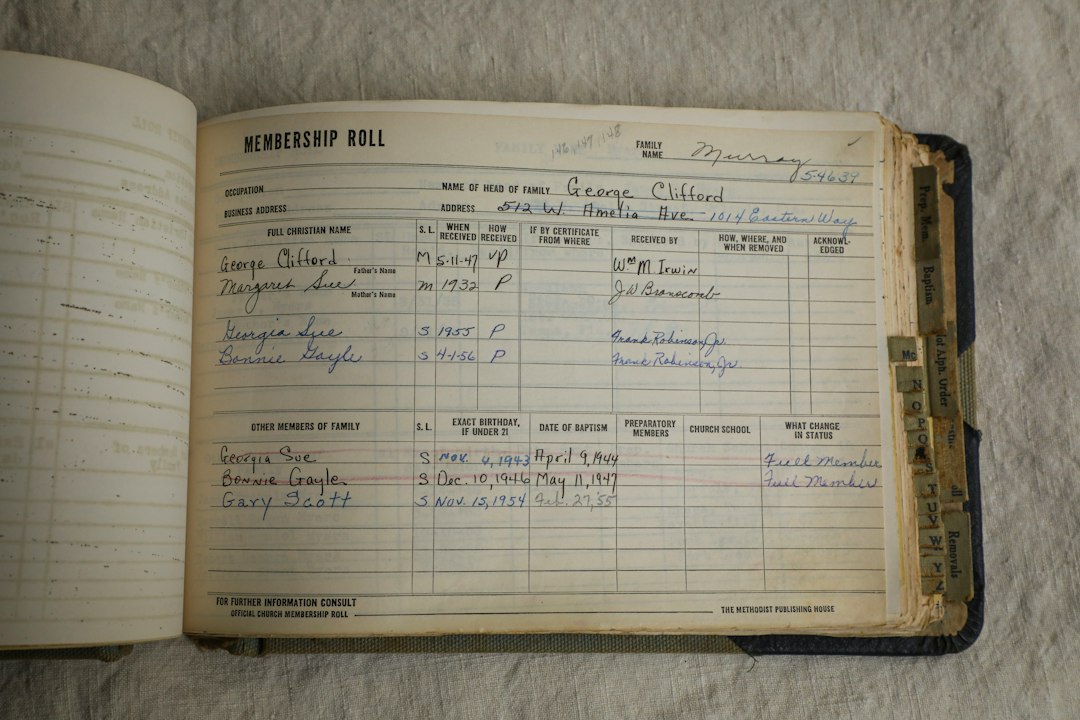
Subsidiary ledger: 7 Steps, Examples and Practical Checks
Subsidiary ledger is a framework or method that helps businesses understand an operational question, organize decisions and make results easier to verify. The core challenge is using it with real data and accountable people, not just learning its definition. This guide explains seven important components, practical examples, implementation decisions, likely errors and ways to measure results.
Start by identifying one decision that the framework needs to support. Write down its intended outcome, the evidence managers need and the constraints that could make an otherwise attractive option unsuitable. A small, testable business question gives the rest of the analysis a clear purpose.
What is subsidiary ledger and when should you use it?
Subsidiary ledger provides a structured way to assess information. It is useful when teams face tradeoffs, need to compare results or require consistent documentation. However, not every situation needs a complex process. A brief worksheet may be sufficient when the stakes and the number of stakeholders are modest.
For example, a team choosing between two suppliers can compare costs and service without adopting a full enterprise platform. A larger organization may need a formal record of who approved each choice, what assumptions were used and whether the expected outcome was achieved. The right level of formality depends on risk, scope and repeatability.
7 important steps and considerations for subsidiary ledger
1. Receivables
Receivables is one of the major parts of subsidiary ledger. Begin by specifying what information belongs in this section and what decision it supports. For example, if a committee is reviewing several options, the team needs a shared definition rather than seven personal interpretations of the same criterion.
Suppose a company has to complete a decision this quarter but receives incomplete figures. When addressing receivables, a responsible owner should identify what is missing, investigate the original source and decide whether a provisional assumption is acceptable. Make that assumption visible, together with the person responsible for validating it.
Next, connect receivables with payables. Information from different teams may use different reporting periods or classifications. Review those differences before combining data. When changes happen, preserve the previous version so stakeholders can understand why an earlier recommendation changed.
A useful quality check is to ask someone outside the project to reproduce the conclusion from the records alone. If they cannot, improve the definitions, calculations or documentation. The goal is not more paperwork. It is sufficient evidence for a decision that others can understand and question.
2. Payables
Payables is one of the major parts of subsidiary ledger. Begin by specifying what information belongs in this section and what decision it supports. For example, if a committee is reviewing several options, the team needs a shared definition rather than seven personal interpretations of the same criterion.
Suppose a company has to complete a decision this quarter but receives incomplete figures. When addressing payables, a responsible owner should identify what is missing, investigate the original source and decide whether a provisional assumption is acceptable. Make that assumption visible, together with the person responsible for validating it.
Next, connect payables with fixed assets. Information from different teams may use different reporting periods or classifications. Review those differences before combining data. When changes happen, preserve the previous version so stakeholders can understand why an earlier recommendation changed.
A useful quality check is to ask someone outside the project to reproduce the conclusion from the records alone. If they cannot, improve the definitions, calculations or documentation. The goal is not more paperwork. It is sufficient evidence for a decision that others can understand and question.
3. Fixed assets
Fixed assets is one of the major parts of subsidiary ledger. Begin by specifying what information belongs in this section and what decision it supports. For example, if a committee is reviewing several options, the team needs a shared definition rather than seven personal interpretations of the same criterion.
Suppose a company has to complete a decision this quarter but receives incomplete figures. When addressing fixed assets, a responsible owner should identify what is missing, investigate the original source and decide whether a provisional assumption is acceptable. Make that assumption visible, together with the person responsible for validating it.
Next, connect fixed assets with individual accounts. Information from different teams may use different reporting periods or classifications. Review those differences before combining data. When changes happen, preserve the previous version so stakeholders can understand why an earlier recommendation changed.
A useful quality check is to ask someone outside the project to reproduce the conclusion from the records alone. If they cannot, improve the definitions, calculations or documentation. The goal is not more paperwork. It is sufficient evidence for a decision that others can understand and question.
4. Individual accounts
Individual accounts is one of the major parts of subsidiary ledger. Begin by specifying what information belongs in this section and what decision it supports. For example, if a committee is reviewing several options, the team needs a shared definition rather than seven personal interpretations of the same criterion.
Suppose a company has to complete a decision this quarter but receives incomplete figures. When addressing individual accounts, a responsible owner should identify what is missing, investigate the original source and decide whether a provisional assumption is acceptable. Make that assumption visible, together with the person responsible for validating it.
Next, connect individual accounts with control totals. Information from different teams may use different reporting periods or classifications. Review those differences before combining data. When changes happen, preserve the previous version so stakeholders can understand why an earlier recommendation changed.
A useful quality check is to ask someone outside the project to reproduce the conclusion from the records alone. If they cannot, improve the definitions, calculations or documentation. The goal is not more paperwork. It is sufficient evidence for a decision that others can understand and question.
5. Control totals
Control totals is one of the major parts of subsidiary ledger. Begin by specifying what information belongs in this section and what decision it supports. For example, if a committee is reviewing several options, the team needs a shared definition rather than seven personal interpretations of the same criterion.
Suppose a company has to complete a decision this quarter but receives incomplete figures. When addressing control totals, a responsible owner should identify what is missing, investigate the original source and decide whether a provisional assumption is acceptable. Make that assumption visible, together with the person responsible for validating it.
Next, connect control totals with reconciliation. Information from different teams may use different reporting periods or classifications. Review those differences before combining data. When changes happen, preserve the previous version so stakeholders can understand why an earlier recommendation changed.
A useful quality check is to ask someone outside the project to reproduce the conclusion from the records alone. If they cannot, improve the definitions, calculations or documentation. The goal is not more paperwork. It is sufficient evidence for a decision that others can understand and question.
6. Reconciliation
Reconciliation is one of the major parts of subsidiary ledger. Begin by specifying what information belongs in this section and what decision it supports. For example, if a committee is reviewing several options, the team needs a shared definition rather than seven personal interpretations of the same criterion.
Suppose a company has to complete a decision this quarter but receives incomplete figures. When addressing reconciliation, a responsible owner should identify what is missing, investigate the original source and decide whether a provisional assumption is acceptable. Make that assumption visible, together with the person responsible for validating it.
Next, connect reconciliation with audit trail. Information from different teams may use different reporting periods or classifications. Review those differences before combining data. When changes happen, preserve the previous version so stakeholders can understand why an earlier recommendation changed.
A useful quality check is to ask someone outside the project to reproduce the conclusion from the records alone. If they cannot, improve the definitions, calculations or documentation. The goal is not more paperwork. It is sufficient evidence for a decision that others can understand and question.
7. Audit trail
Audit trail is one of the major parts of subsidiary ledger. Begin by specifying what information belongs in this section and what decision it supports. For example, if a committee is reviewing several options, the team needs a shared definition rather than seven personal interpretations of the same criterion.
Suppose a company has to complete a decision this quarter but receives incomplete figures. When addressing audit trail, a responsible owner should identify what is missing, investigate the original source and decide whether a provisional assumption is acceptable. Make that assumption visible, together with the person responsible for validating it.
Next, connect audit trail with receivables. Information from different teams may use different reporting periods or classifications. Review those differences before combining data. When changes happen, preserve the previous version so stakeholders can understand why an earlier recommendation changed.
A useful quality check is to ask someone outside the project to reproduce the conclusion from the records alone. If they cannot, improve the definitions, calculations or documentation. The goal is not more paperwork. It is sufficient evidence for a decision that others can understand and question.
Example: choosing an improvement project
Imagine a company wants to reduce delays in processing customer orders. Managers believe a software upgrade could help, while frontline staff report unclear approval rules. Instead of jumping to a purchase, the team defines the actual problem: a large share of orders require extra clarification after initial submission.
The project owner gathers a representative sample of cases and measures where delays occur. The group identifies process steps, defines evaluation criteria, estimates costs and documents risks. It then compares a small process redesign with a software-based alternative using the same evidence and time horizon.
The result might be a pilot rather than a full rollout. During the pilot, staff track whether errors and wait times improve, and whether customers experience fewer follow-ups. This approach makes the decision testable. It also prevents managers from treating a prediction as proof of value.
How to avoid misleading conclusions
A precise score or formula is not automatically a correct conclusion. Assumptions may be uncertain, data may be incomplete and a criterion may favor one option because it was defined too narrowly. Review what would happen if the most important input changed. Where useful, test a pessimistic, central and optimistic case.
For comparisons, keep the same time periods, units and definitions. For planning frameworks, give affected teams a chance to challenge missing information. For financial ratios, make sure calculations use compatible figures and explain what the result does not show.
Putting the method into daily work
Assign decision ownership
Name one owner who maintains the analysis and records approvals. Contributors can supply information or challenge assumptions, but ownership should not become ambiguous. If several departments are involved, define who makes the final decision and who must be consulted first.
Create a compact template
Include the business question, inputs, source references, decision criteria, assumptions, risks, proposed action and review date. Use plain language. Every field should have a practical purpose, and a person joining the project later should be able to understand the reasoning.
Test with a difficult case
Run the process on a case with incomplete data or conflicting stakeholder opinions. Record which rules work and which require clarification. Adjust the method before making it mandatory across the organization.
Software and automation
Spreadsheets or shared documents are often enough for early analysis. Larger teams may need version history, permission controls, shared status, approval routing and dashboards. Choose software according to the work itself, not the number of features on a sales page.
Before selecting a tool, test importing data, changing a record, reproducing the output and exporting the history. Ask whether employees can work with the tool independently. If teams constantly copy results by hand, consider integration requirements as part of the total cost.
A four-week rollout plan
Week 1: Define the problem
Select a narrow use case, identify the decision owner and gather relevant existing records. Agree on success criteria, important constraints and the people who must participate.
Week 2: Prepare the analysis
Use the seven steps above to build a draft. Confirm sources and assumptions. Run an ordinary example and one that challenges the preferred option.
Week 3: Pilot with users
Have team members apply the method to actual work. Record unclear definitions, missing data and avoidable steps. Make revisions before expanding the scope.
Week 4: Review and improve
Compare the results with the original objective. Decide whether the framework produced a clearer or better decision and what must change. Set a future review date to account for new information.
Common mistakes
- Starting with a preferred answer: Define the problem before comparing options.
- Weak inputs: Validate data and record assumptions.
- Unequal comparisons: Use consistent criteria and periods.
- Unclear authority: Identify who decides and who advises.
- No sensitivity analysis: Check whether modest assumption changes alter the result.
- No follow-up: Compare predicted benefits with actual outcomes.
Further reading
For established practices, see this relevant professional or official resource and additional authoritative guidance. Use current source material and confirm any legal or financial requirements before making consequential decisions.
Frequently asked questions
What is the purpose of subsidiary ledger?
Its purpose is to create a clearer and more consistent basis for business decisions.
What should teams prepare first?
Begin with a specific objective, trustworthy information and clear decision ownership.
Can a small company use it?
Yes. Start with a short worksheet and one real case. Add complexity only when risk or scope requires it.
How can managers check the result?
Review assumptions, reproduce the analysis and compare outcomes with the original goal.
Conclusion
Subsidiary ledger works best when an organization combines a clear question, reliable evidence and accountable judgment. Start with a representative example, test assumptions and review the result before scaling the process. The goal is a better decision, not merely a completed template.



