Plumbing Estimating Software: 9 Features for Faster, More Accurate Bids
Plumbing estimating software helps contractors turn project plans, measurements, labor rates, and material costs into accurate job estimates and professional bids. Instead of calculating every fixture, pipe, fitting, labor hour, and markup manually, contractors can use specialized software to organize estimating work in one place. As a result, plumbing companies can spend less time building quotes and more time reviewing project details, serving customers, and pursuing profitable jobs.
In this guide, we will explain what plumbing estimating software does, how it works, the key features to look for, and how it compares with manual estimating and general contractor software. We will also cover common estimating mistakes, important selection factors, and how plumbing estimating programs can support residential and commercial projects.
What Is Plumbing Estimating Software?
Plumbing estimating software is a digital tool designed to help plumbing contractors calculate the expected cost of a project before work begins. It can organize material quantities, labor requirements, equipment costs, subcontractor expenses, overhead, taxes, and profit margins within a structured estimate.
For example, a contractor estimating a bathroom renovation may need to price water supply lines, drain pipes, valves, faucets, toilets, fittings, fixtures, installation labor, removal work, and other project requirements. Instead of entering and calculating each item across separate spreadsheets, the contractor can manage those details within one estimating system.
More importantly, specialized software creates a repeatable estimating process. Contractors can save common items, reuse pricing information, apply markup rules, and generate estimates in a consistent format.
Key takeaway
The main purpose of plumbing estimating software is not simply to produce a number. It helps contractors create organized, transparent, and repeatable estimates that reflect project requirements and business costs.
How Does Plumbing Estimating Software Work?
Most plumbing estimating workflows follow a straightforward process. First, the contractor gathers project information from plans, drawings, specifications, site measurements, or customer requirements. Next, the estimator identifies the materials, fixtures, labor, equipment, and other costs needed to complete the work.
The software then organizes these items into an estimate. Depending on the platform, contractors may enter quantities manually, import information, use saved cost catalogs, or connect estimating data with other business systems.
After calculating direct costs, the contractor can add overhead, markup, taxes, contingency amounts, or profit margins. Finally, the system can generate a customer-facing proposal or estimate.
Therefore, the software acts as a bridge between project information and the final price presented to the customer.
9 Key Features of Plumbing Estimating Software
1. Material and Fixture Cost Management
Plumbing projects can involve hundreds of individual items. Pipes, fittings, valves, pumps, fixtures, connectors, sealants, and installation materials can all affect the final project price.
Plumbing estimating software lets contractors organize these items within estimates and assign quantities and prices. This makes it easier to see where material costs come from and identify items that may have been missed.
For example, an estimator can create a project using copper or PEX piping, add the required fittings, include fixtures, and calculate the material subtotal before adding labor and overhead.
Good cost management also helps contractors update pricing when supplier costs change. That matters because an old material price can quickly make an otherwise accurate estimate less useful.
2. Plumbing Takeoff Support
Quantity takeoff is one of the most important parts of construction estimating. It involves identifying how much material a project requires before calculating its cost.
Plumbing estimating programs can help contractors organize quantities for pipes, fittings, fixtures, valves, drains, and other components. Some platforms may also support digital plan takeoffs or measurement workflows.
The goal is simple: determine what the project needs before assigning prices. When quantity information remains organized, estimators have a clearer foundation for building the final bid.
3. Labor Cost Calculations
Materials represent only part of a plumbing project’s cost. Labor can vary significantly depending on project type, installation complexity, crew size, location, and expected working hours.
Estimating software can calculate labor using hourly rates, estimated hours, crew configurations, or predefined tasks. For example, an estimator could assign a labor rate to fixture installation and another rate to specialized pipe installation.
As a result, contractors can separate material costs from labor costs and review both before submitting a proposal.
4. Markup and Profit Management
A bid must cover more than direct project expenses. Contractors also need to account for business overhead and the profit they expect from the work.
Plumbing estimating software can apply markup rules to selected costs or to an entire estimate. This reduces the need to perform repeated calculations manually.
However, contractors should not rely blindly on automated markup settings. Before submitting a bid, review the final price against the project’s scope, risk, labor requirements, material costs, and business objectives.
5. Reusable Estimate Templates
Many plumbing businesses perform similar types of work repeatedly. Residential bathroom installations, water heater replacements, repiping, drain work, commercial plumbing installations, and maintenance projects may share common cost items.
Templates allow contractors to save frequently used structures and adjust them for each new project. Instead of rebuilding an estimate from scratch, the estimator can start with a relevant template and modify quantities, materials, labor, and pricing.
This approach can make estimating more consistent while reducing repetitive data entry.
6. Professional Proposals and Estimates
A clear estimate can make it easier for customers to understand what they are paying for. Rather than presenting one unexplained total, contractors can organize the proposal into labor, materials, fixtures, services, and other applicable costs.
Many plumbing estimating systems can turn estimate data into professional documents. Depending on the software, contractors may be able to add company information, project details, terms, payment conditions, and expiration dates.
For larger jobs, this structure also helps customers and contractors review the scope before work begins.
7. Job and Estimate Tracking
Estimating becomes more useful when contractors can track what happens after the estimate leaves the office. A system can help teams distinguish between drafts, submitted estimates, approved work, and rejected bids.
This creates a clearer workflow for sales and project planning. For example, a contractor can review pending estimates and follow up with customers instead of relying on scattered spreadsheets or email threads.
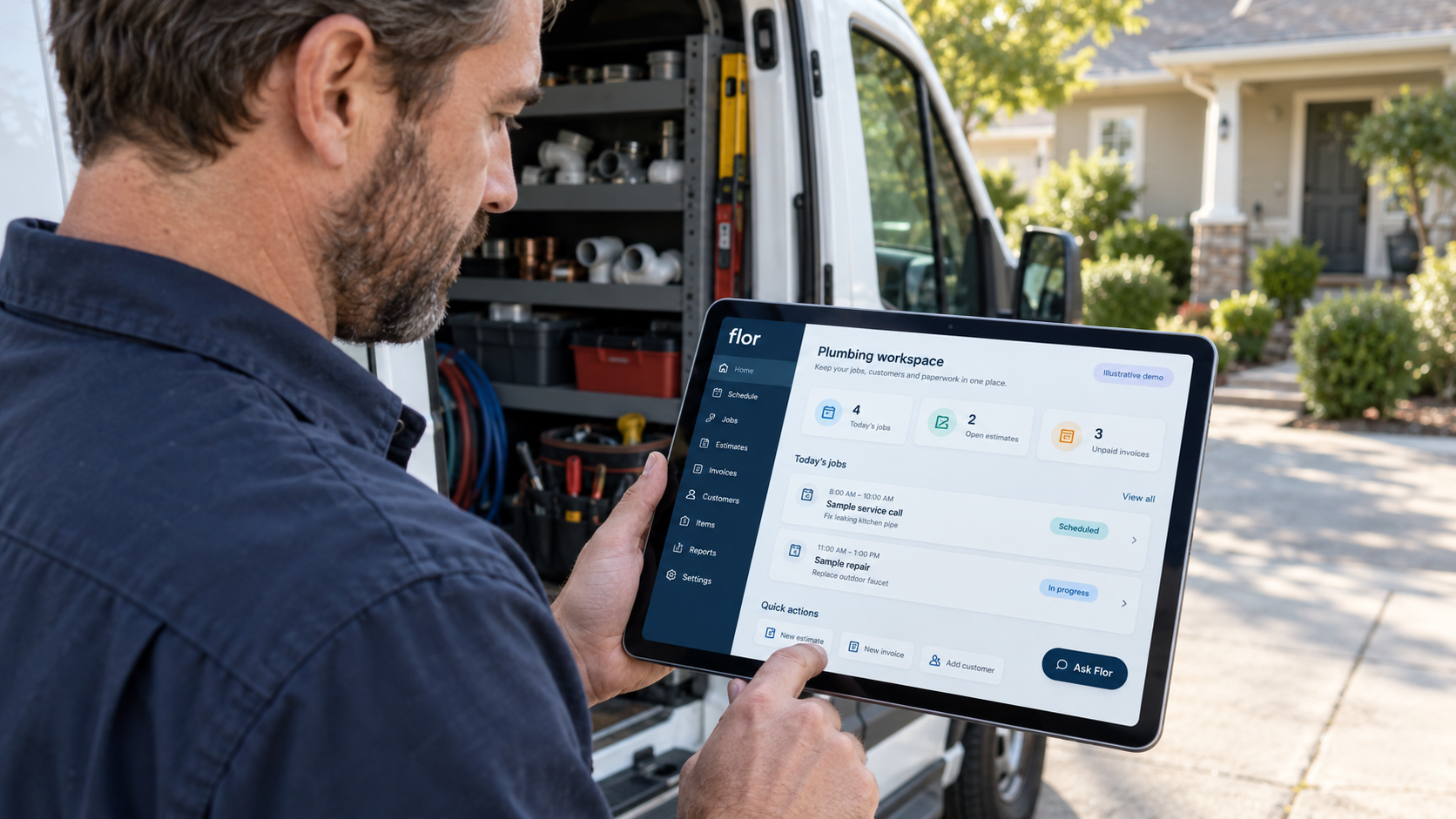
In addition, connecting estimating with broader field-service processes can reduce duplicate data entry after a customer approves the work.
8. Mobile and Cloud Access
Plumbing contractors often work away from the office. An estimator may need to review pricing from a job site, while an owner may want to check an estimate from another location.
Cloud-based plumbing estimating software can provide access to current project information across supported devices. This can be useful when teams need to review project details, update estimates, or communicate pricing while working in the field.
However, contractors should check device compatibility, user permissions, offline capabilities, and data security before choosing a cloud-based system.
9. Integration With Business Software
Estimating rarely exists as an isolated business process. Once a customer accepts a quote, the project may move into scheduling, invoicing, accounting, customer management, purchasing, and field service.
That is why integrations can matter when evaluating plumbing estimating programs. Connecting estimating data with other systems can reduce duplicate entry and help teams maintain consistent project information.
For plumbing businesses with more complex workflows, custom software can also connect estimating with the company’s existing operational processes rather than forcing every team to follow a generic workflow.
Plumbing Estimating Software vs. Spreadsheets
Spreadsheets can work well for small or straightforward estimates. They are flexible, familiar, and easy to customize. However, estimating becomes harder to manage when a business handles many projects, frequently changes material prices, or needs multiple employees to work with the same information.
| Area | Spreadsheet | Plumbing Estimating Software |
|---|---|---|
| Cost calculations | Usually manual formulas | Structured calculations and pricing rules |
| Templates | Possible with manual setup | Purpose-built reusable templates |
| Estimate tracking | Often requires manual organization | Can track estimate status within the system |
| Field access | Depends on spreadsheet platform | Often designed for cloud and mobile workflows |
| Integrations | May require additional work | Can connect with business systems |
Therefore, the right choice depends on the contractor’s workload and process complexity. A small company with occasional estimates may find spreadsheets sufficient, while a growing plumbing business may benefit from a dedicated estimating workflow.
How to Choose the Right Plumbing Estimating Software
Choosing software based only on the number of features can lead to a poor fit. Instead, contractors should evaluate how well the system supports their actual estimating process.
Consider Project Types
First, identify the work your company estimates most often. Residential service jobs, new construction, commercial plumbing, remodeling, repiping, and large mechanical projects can have different estimating requirements.
Choose software that supports the type of work you perform rather than paying for tools your team will rarely use.
Check Pricing and Cost Management
Next, review how the software handles material pricing, labor rates, markups, taxes, discounts, and other costs. Make sure you can update prices without rebuilding existing estimates.
For example, if your supplier changes the price of a common pipe or fixture, the system should make it practical to update your cost data.
Review Takeoff Capabilities
If your team estimates from construction plans, takeoff support may be especially important. Determine whether the platform supports the measurements and workflows your estimators already use.
Do not assume that every product marketed as estimating software offers the same takeoff capabilities.
Evaluate Reporting and Estimate History
Good historical data can help contractors review previous estimates and understand how projects were priced. Look for tools that make it easy to find past estimates, compare project information, and review changes.
This becomes increasingly valuable as the business grows and multiple estimators work on different projects.
Check Integrations
Finally, consider what happens after a customer accepts an estimate. If your team uses accounting, CRM, scheduling, invoicing, purchasing, or field service software, check whether the estimating platform can connect with those systems.
For broader construction workflows, related tools such as plumbing business management software can also help contractors think beyond estimating and evaluate the wider operational process.
Pro tip
Before purchasing software, build one real estimate inside the platform. Use a completed project with known material quantities, labor requirements, and final costs. This practical test can reveal workflow problems that a feature list may not show.
Common Plumbing Estimating Mistakes to Avoid
Even good software cannot fix incomplete project information. Therefore, contractors should focus on the estimating process as well as the technology.
- Missing small materials: Fittings, connectors, valves, supports, sealants, and other small components can add up across a project.
- Using outdated prices: Old supplier costs can distort the final estimate.
- Ignoring labor complexity: A simple fixture replacement and a difficult commercial installation may require very different labor assumptions.
- Forgetting overhead: Vehicles, office expenses, insurance, tools, administration, and other operating costs can affect profitability.
- Skipping scope review: An estimate should match the actual project scope and clearly identify exclusions or assumptions.
- Relying on default settings: Automated calculations still need human review before a contractor submits a bid.
Estimating Plumbing Materials With Greater Accuracy
Material selection can affect both the project price and the customer’s expectations. For instance, contractors may need to estimate different fixture models, pipe materials, fittings, valves, and water-efficiency products.
When projects specify efficient plumbing fixtures, contractors should verify product requirements rather than assuming that every fixture qualifies for a particular certification. The EPA WaterSense label requirements explain which products qualify for the label and how certification relates to water efficiency and performance.
Likewise, the U.S. Department of Energy provides federal guidance covering water-efficient plumbing products such as faucets, showerheads, toilets, and related fixtures. Contractors can use authoritative product information when project specifications call for particular efficiency requirements. Federal guidance on water-efficient plumbing products provides additional reference material.
As a result, estimating software should help organize project requirements, but estimators still need to confirm specifications and product details before finalizing a bid.
When Should a Plumbing Company Use Dedicated Estimating Software?
Dedicated software becomes more useful as estimating volume and complexity increase. A contractor who creates only a few simple estimates each month may not need an advanced platform.
On the other hand, dedicated plumbing estimating software can make more sense when the company handles frequent bids, multiple estimators, complex projects, changing material prices, or detailed takeoffs.
It can also help when owners want a more consistent estimating process across employees. Instead of allowing every estimator to maintain a different spreadsheet, the company can establish shared templates, pricing rules, and workflows.
For companies that need estimating to connect with customer management and other business processes, custom development may provide another option. A tailored system can combine estimating, customer records, project information, scheduling, invoicing, and other workflows in one environment.
Frequently Asked Questions
Frequently Asked Questions
What is plumbing estimating software?
Plumbing estimating software helps contractors calculate material, labor, overhead, markup, and other project costs to create organized estimates and bids.
What are plumbing estimating programs used for?
Plumbing estimating programs help contractors perform takeoffs, calculate material and labor costs, apply markup, create proposals, and track estimates through the bidding process.
Can plumbing estimating software handle labor costs?
Yes. Many estimating platforms allow contractors to define labor rates, estimated hours, crew costs, or task-based labor expenses and include them in project estimates.
Is plumbing estimating software better than Excel?
It depends on the business. Excel can work well for simple estimates, while dedicated software can provide more structured workflows, templates, estimate tracking, takeoff support, and integrations.
What should plumbers look for in estimating software?
Look for accurate cost management, takeoff support, labor calculations, reusable templates, proposal generation, estimate tracking, mobile access, integrations, and pricing that fits your business.
Final Thoughts
Plumbing estimating software can bring structure to one of the most important stages of a plumbing project. By organizing material quantities, labor costs, pricing, markup, and proposals, it can help contractors build estimates with a more consistent process.
However, software works best when contractors combine it with careful scope review and accurate project information. Before choosing a platform, test it with a real plumbing project and evaluate its takeoff, pricing, labor, proposal, reporting, and integration capabilities.
For businesses with unique workflows, a custom solution can also connect estimating with the rest of the operation. The goal should be a system that fits how your plumbing company actually works, rather than simply adding another tool to the technology stack.
Build software around how your business works
If your plumbing business needs a tailored workflow for estimating, customer management, project operations, or related processes, custom software can connect those needs in one solution.Talk to our team