
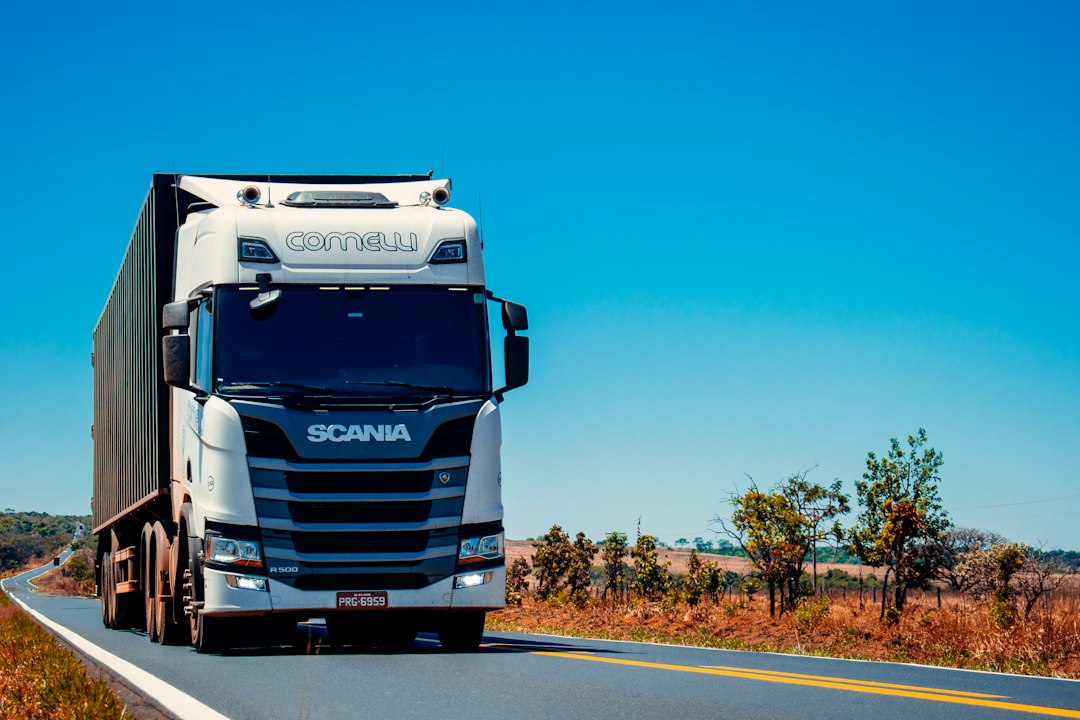
AI in Transportation: 8 Ways to Improve Planning, Fleet Visibility, and Service
AI in transportation uses data analysis, prediction, and pattern recognition to help organizations plan routes, manage fleets, forecast demand, and coordinate services. It can support freight operators, passenger transport providers, delivery businesses, and organizations that manage vehicles across multiple locations. Its value comes from better decisions, not from removing human oversight.
Transportation operations face changing traffic, weather, delivery windows, driver availability, vehicle conditions, and customer expectations. AI can help teams respond to those changes when it has timely and accurate data. This article covers eight practical applications and the operational controls needed to use them responsibly.
How AI supports transportation operations
Transportation systems produce data from orders, GPS devices, telematics, traffic services, vehicle inspections, fuel records, and dispatch platforms. AI tools can combine these sources to identify patterns and suggest actions. For example, a route model may compare current conditions with historical travel times, while a maintenance model may flag a vehicle whose readings differ from its normal pattern.
However, a model cannot compensate for poor source data or unclear operating rules. Teams should decide which system owns each record, how often it updates, and who has authority to accept or override a recommendation.
8 practical uses of AI in transportation
1. Route planning and optimization
Route tools can evaluate delivery locations, vehicle capacity, time windows, road restrictions, and live traffic to suggest efficient routes. For operations with many stops, optimization can reduce unnecessary distance and help dispatchers balance workloads.
Real-world routing must account for loading time, driver breaks, vehicle height or weight limits, restricted roads, and customer access. Dispatchers should be able to review constraints and adjust a route when local knowledge outweighs the model’s suggestion.
2. Demand forecasting
Historical orders, seasonality, promotions, weather, and local events can help forecast demand by area and time. Better forecasts support staffing, vehicle allocation, capacity planning, and purchasing decisions.
Track forecast error by location and service type. A model that performs well across the whole network may still perform poorly in a new market or during unusual demand spikes.
3. Predictive vehicle maintenance
When fleet systems capture mileage, engine diagnostics, fault codes, service history, and usage patterns, AI may help identify vehicles that need inspection sooner than planned. This can reduce unplanned downtime and support maintenance scheduling.
Use model alerts alongside manufacturer guidance and mechanic inspections. Do not keep a vehicle in service simply because a model predicts low risk. Safety checks and legal requirements remain mandatory.
4. Dispatch and capacity balancing
AI-assisted dispatch can help assign jobs based on vehicle capacity, driver availability, skills, location, and service commitments. It can also highlight overloaded routes or idle capacity that planners may otherwise miss.
Make the assignment logic understandable to dispatchers. They need to see why a job was assigned and have a way to handle urgent requests, special equipment, or customer-specific constraints.
5. Fuel and energy efficiency
Models can analyze fuel use, idle time, route profiles, vehicle loads, and driving patterns to identify opportunities for improvement. For electric fleets, energy forecasts may help planners consider battery range, charging windows, and depot capacity.
Compare like-for-like routes and vehicles before drawing conclusions. Fuel use changes with weather, load, terrain, traffic, and maintenance condition. Use insights to improve planning and coaching rather than relying on a single metric.
6. Shipment visibility and delay prediction
By combining location updates, planned milestones, traffic, and historical transit times, AI can estimate whether a shipment may arrive late. Teams can prioritize at-risk orders and notify customers before a missed delivery becomes a surprise.
Define what counts as a meaningful delay and how frequently status updates should refresh. If tracking data goes stale, the interface should show that limitation instead of presenting an old estimate as current.
7. Safety and incident pattern analysis
Organizations can analyze incident reports, vehicle inspections, route conditions, and telematics to identify recurring risk patterns. This may help safety teams focus training or review locations with repeated issues.
Use data proportionately and transparently. Avoid treating a model score as proof of fault. Explain what information is collected, who can see it, and how employees can challenge inaccurate records.
8. Customer service and operations support
AI assistants can help staff find shipment status, summarize service history, classify incoming requests, and draft routine updates. This can shorten response times when the assistant draws from approved, current records.
Keep customer-facing messages accurate and give staff an escalation path for exceptions. The system should not invent delivery promises or disclose another customer’s information.
Data and integration requirements
Useful transportation AI often depends on several systems working together: fleet management, dispatch, order management, GPS or telematics, maintenance, customer support, and billing. Before a pilot, map the key identifiers used across those systems, such as vehicle ID, driver ID, shipment number, and customer account.
Check data freshness, missing values, duplicate records, and integration failure alerts. Also decide which source is authoritative when two systems disagree. Without these basics, teams may spend more time correcting data than using the model’s recommendations.
How to introduce AI without disrupting service
- Choose one operational problem: For example, late deliveries, empty mileage, or unplanned maintenance.
- Set a baseline: Record current performance before introducing the tool.
- Run a limited pilot: Use one depot, route group, or vehicle category.
- Keep a human decision-maker: Let dispatchers and fleet managers review recommendations.
- Measure both gains and errors: Track time saved, cost, missed alerts, and incorrect suggestions.
- Expand carefully: Add locations only after the process works reliably.
Risks to address
Transportation data can reveal employee location and behavior, customer addresses, and commercially sensitive routes. Protect it with access controls, encryption, retention limits, and clear vendor agreements. Review whether location tracking is necessary for the stated purpose and communicate the policy to affected workers.
Another risk is optimizing one metric at the expense of service quality. A shorter route is not useful if it misses delivery windows or overloads drivers. Set balanced measures that include safety, reliability, cost, customer experience, and employee workload.
Turn transportation data into better decisions
AI in transportation can help organizations plan more accurately, spot operational risks, and communicate more clearly. The best starting point is a defined problem with reliable data and a workflow that keeps experienced people involved.
Anomoz Softwares helps businesses connect operational systems and build software around dispatch, fleet, scheduling, and reporting needs. A practical roadmap can show whether existing tools are enough or where a tailored integration would make the biggest difference.
Connect the data that dispatchers actually use
A transportation AI project often depends on several records that use different identifiers. A dispatch platform may identify a job by order number, telematics may identify a vehicle by device ID, and maintenance may use an internal asset number. Map these identifiers before building an integration. Otherwise, the model may associate a location update with the wrong vehicle or fail to connect a delay to its shipment.
Define update frequency for each source. A route recommendation based on yesterday’s traffic or a shipment status based on an old GPS ping can mislead the operations team. The interface should show when information last refreshed and flag missing feeds clearly.
Balance optimization with service commitments
Transportation teams rarely optimize one measure in isolation. A route with fewer miles may create a missed delivery window, an unsafe schedule, or an excessive workload. Build constraints for customer commitments, driver hours, vehicle capacity, road restrictions, breaks, and service priorities into the planning process.
Allow dispatchers to override a recommendation and record the reason. Those overrides can reveal missing constraints or local knowledge that should inform future configuration. Review the results with drivers and operations staff, not only with analysts.
Establish operational and privacy controls
Assign owners for data quality, model monitoring, integration failures, and incident escalation. Decide what happens when the AI service is unavailable: teams should have a workable manual dispatch process and access to essential records. Test the fallback before a disruption occurs.
Review employee and customer privacy as part of the design. Limit access to location histories, define retention periods, and explain how tracking supports the service. Monitor model performance across routes, seasons, and vehicle types because conditions change. A system that performs well in one depot may need adjustment before it is used elsewhere.
Build a fallback for service interruptions
Transportation operations cannot stop when a software integration or AI service fails. Define a manual process for dispatch, customer updates, and vehicle assignment. Keep essential contact details and active job information accessible to authorized staff, and test the fallback during a planned exercise.
Set alerts for stale location feeds, failed data transfers, and unavailable third-party services. Assign an owner to investigate each issue and communicate its impact to dispatchers. A visible warning is safer than showing an old route estimate as if it were current.
Use a balanced performance scorecard
Review route efficiency alongside on-time delivery, customer complaints, driver workload, safety events, empty mileage, and vehicle utilization. Segment results by route type, region, season, and vehicle category so that averages do not hide a local problem.
Discuss the scorecard with the people who manage and perform the work. They can explain unusual conditions that a model may not capture, such as road closures, loading delays, or customer access restrictions. Use that feedback to improve data and planning rules before expanding the system.
Further reading and related fleet systems
The U.S. Department of Transportation describes its work on AI in transportation, including safety, traffic management, and operational applications. The NIST AI Risk Management Framework is a useful cross-industry reference for managing AI risks. For related operating models, see Anomoz’s articles on transportation brokerage software and truck management software.
Frequently asked questions
Can AI optimize delivery routes in real time?
Some systems can revise routes as traffic, orders, or vehicle conditions change. Their usefulness depends on current data and the ability to respect delivery windows, vehicle limits, and driver rules.
Does AI predict vehicle breakdowns?
Models can flag patterns in diagnostic and maintenance data that may indicate a need for inspection. They cannot guarantee that a vehicle is safe or replace required maintenance checks.
Is AI in transportation only for large fleets?
No. Smaller operators can begin with a focused application such as route planning or delay alerts, provided the data and expected benefit justify the cost.
How can a transport business measure AI results?
Compare on-time performance, empty mileage, fuel or energy use, maintenance downtime, customer complaints, and driver workload against a baseline.
Use AI to improve the quality and speed of transport decisions while keeping dispatchers and fleet professionals in control.



